Tiếng Việt

When deciding on dental care, understanding the fundamental differences in function, scope of expertise, and legal authorization between a dental clinic and a Maxillofacial Hospital is essential. While clinics excel at handling routine procedures, complex treatments – such as full-arch dental implants or procedures requiring conscious sedation or general anesthesia – demand the stringent safety standards only a hospital can provide. Recognizing these key distinctions will help you make a safe, well-informed choice, fully supported by the advanced care model at Worldwide Dental Hospital.
1. Key Differences Between a Dental Clinic and a Maxillofacial Hospital
To choose the right option, it helps to understand the defined scope and clinical focus of each model.
What Is a Dental Clinic?
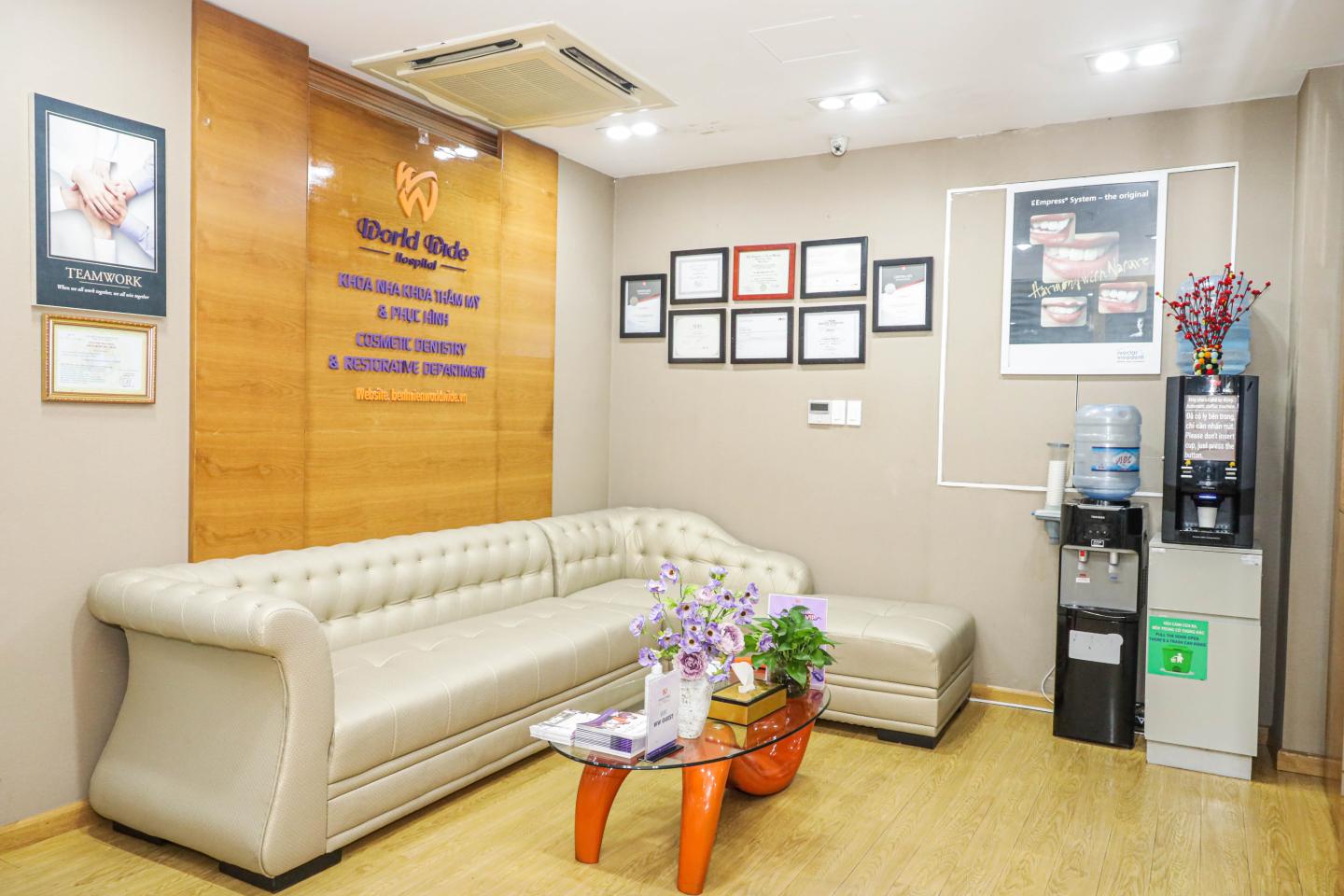
A dental clinic is an outpatient medical facility focused primarily on primary care and routine dental treatments. Its standard scope of services includes:
- Routine dental checkups and oral hygiene consultations
- Scaling, polishing, and teeth whitening
- Cosmetic fillings and root canal therapy
- Single crowns and fixed dental bridges
- Orthodontics
- Single dental implants for patients with adequate bone density and stable overall health
For general oral healthcare, clinics offer distinct advantages, including convenience, streamlined appointments, and cost efficiency.
What Is a Maxillofacial Hospital?
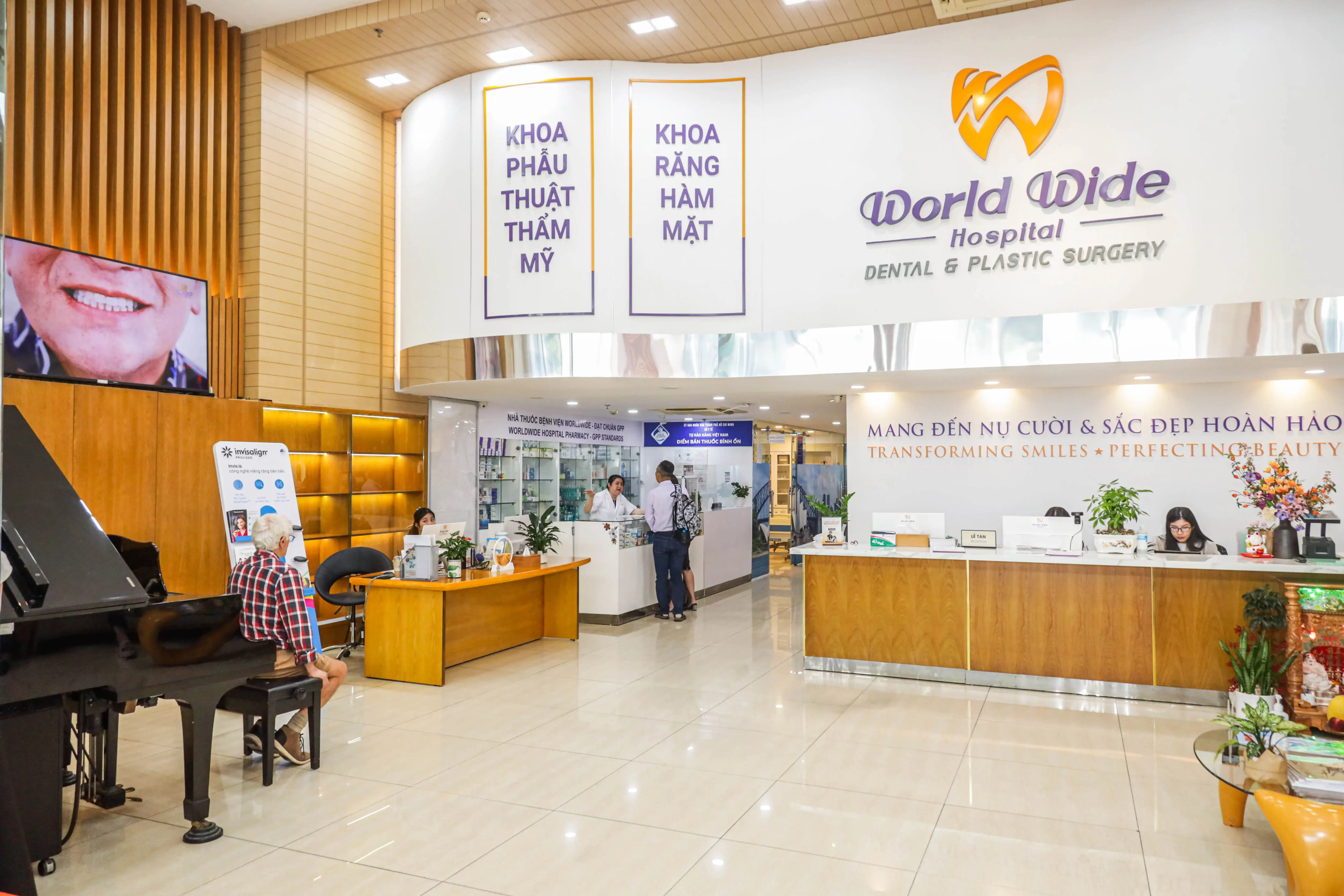
Unlike a standard clinic, a specialized Maxillofacial Hospital operates under comprehensive facility standards and fully integrated clinical workflows. Subject to licensing scope, a specialized hospital features:
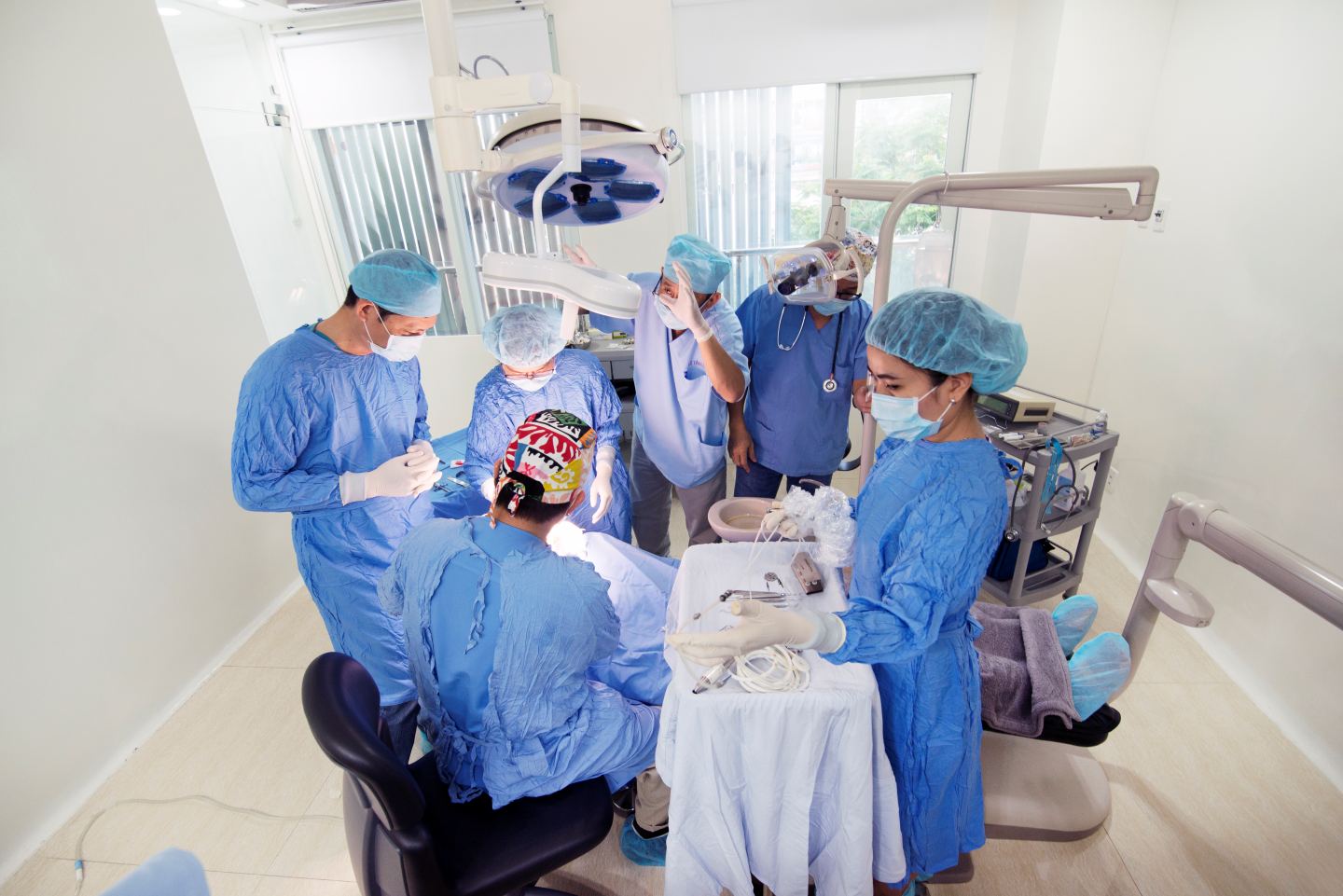
- Sterile, medical-grade operating rooms
- A dedicated Anesthesiology and Post-Anesthesia Care Unit (PACU)
- Advanced vital sign monitoring equipment (electrocardiogram, continuous SpO₂, blood pressure monitoring)
- Comprehensive medical emergency protocols and rapid-response systems
- An integrated team of multidisciplinary specialists
- Advanced diagnostic imaging systems and an on-site dental laboratory
This fully integrated infrastructure enables hospitals to safely manage complex surgical procedures, extensive invasive interventions, and high-risk medical scenarios.
2. Quick Comparison Guide by Treatment Need
| Criteria | Dental Clinic | Maxillofacial Hospital |
| General Checkups, Scaling & Fillings | Suitable | Suitable |
| Porcelain Crowns & Orthodontics | Suitable | Suitable |
| Single Dental Implants | Suitable | Suitable |
| Full-Arch Implants (All-on-X) | Limited capacity | Suitable |
| Conscious Sedation | Not permitted (Local anesthesia only) |
Fully licensed under medical standards |
| General Anesthesia | Not permitted | Performed when medically indicated |
| Sterile ORs, PACU & Anesthesiology Team | Not available | Meets strict hospital-grade standards |
| Emergency Infrastructure & Protocols | Basic | Comprehensive & professionally managed |
| Patients with Pre-existing Conditions | Limited scope | Fully suitable with multidisciplinary consultation |
3. Core Differences That Define Patient Safety
The main difference lies in advanced anesthesia options and robust medical risk management.
Sedation and General Anesthesia
In complex dental procedures, fear and pain are more than just uncomfortable – they are major psychological barriers that lead many patients to delay essential treatment. To alleviate anxiety and ensure optimal pain management, modern dentistry employs two main anesthesia options:
- Conscious Sedation: Places patients in a deeply relaxed state, alleviating nervous tension and maintaining stable blood pressure while allowing them to respond to the doctor’s instructions.
- General Anesthesia: Required or recommended for extensive, multi-hour surgeries, or chosen based on patient preference for complete comfort.
Under medical regulations, administering sedation or general anesthesia demands strict standards: dedicated anesthesiologists, advanced airway monitoring equipment, centralized oxygen systems, emergency medications, and a fully equipped recovery unit. Standard dental clinics lack the legal authorization and critical infrastructure to perform these advanced techniques.
Multidisciplinary Collaborative Care
Full-arch dental implant surgery is a complex procedure that requires a coordinated team of specialists rather than a single practitioner. A hospital-grade treatment plan brings together:
- Implant Surgeons
- Prosthodontists
- Periodontists
- Anesthesiologists
- In-house Master Lab Technicians
When these specialists collaborate within a single hospital ecosystem, your treatment plan undergoes comprehensive consultation, optimizing clinical efficiency and significantly enhancing overall success rates.
Emergency Preparedness & Medical Risk Management
While dental procedures are generally safe, medical complications can still arise – ranging from adverse local anesthetic reactions and anaphylaxis to uncontrolled bleeding, airway distress, or cardiovascular spikes in patients with pre-existing conditions. Equipped with centralized oxygen systems, defibrillators, a dedicated rapid-response team, and full emergency infrastructure, a specialized hospital is prepared to manage urgent situations immediately and effectively.
Adhering strictly to these three core standards forms the foundation that enables Worldwide Dental Hospital to guarantee absolute safety, even for medically compromised patients or those undergoing extensive surgical procedures.
4. When Should You Choose a Dental Hospital?
Treatment at a specialized dental hospital is strongly recommended over a conventional clinic for the following cases:
- Full-arch or multiple dental implants
- Block bone grafting, sinus lifts, or complex surgical procedures
- Dental phobia or severe anxiety
- Patients with underlying medical conditions
- Overseas and international patients: Who require a shorter length of stay through “All-in-One” protocols (combining extractions, bone grafting, implant placement, and temporary restorations in a single intervention).
5. Worldwide: Your Choice for Safe, Sustainable Oral Health
To ensure safety during complex surgeries, Worldwide Dental Hospital is equipped with certified operating rooms, a dedicated recovery unit, and an Anesthesiology and Resuscitation team on standby throughout the treatment process.
The hospital also provides the Worldwide Implant Passport – a digital record storing all material specifications and origins, enabling patients to easily track and maintain lifelong dental care across borders.
Main Hospital in Vietnam:
- Address: 244A Cong Quynh Street, Ben Thanh Ward, Ho Chi Minh City
- Hotline: (+84) 92 838 7989
US Representative Office: Overseas Vietnamese and international patients in the US can receive an initial examination and free consultation before planning their trip to Vietnam for treatment.
- Address: 17055 Newland Street, Huntington Beach, CA 92647, USA
- Hotline: 714-867-7788
Conclusion
Choosing between a dental clinic and a specialized maxillofacial hospital is not about finding a “better” facility, but rather selecting the one that best fits your specific health profile and treatment needs. For routine, straightforward procedures, a standard clinic offers exceptional convenience and flexibility. However, for major invasive surgeries, full-arch restorations, or patients with underlying medical conditions, a specialized hospital provides the highest standard of safety and care – ensuring optimal aesthetic results and long-term oral health.
Frequently Asked Questions (FAQ)
1. Can standard dental clinics perform dental implants?
Yes. Certified dental clinics are fully equipped to successfully perform single-tooth implant procedures for patients with good bone density and stable overall health.
2. Is conscious sedation safe for dental implant surgery?
Conscious sedation is exceptionally safe when administered strictly according to hospital standards. At Worldwide Dental & Cosmetic Hospital, the entire procedure is managed by a dedicated team of specialist anesthesiologists with continuous vital-sign monitoring.
3. Is treatment at Worldwide Dental Hospital more expensive than at a clinic?
Treatment costs depend on case complexity, material selection, and clinical expertise. Hospital pricing reflects our investment in state-of-the-art operating suites, multidisciplinary specialist teams, and rigorous risk management protocols – minimizing potential complications and saving you from costly corrective procedures in the future.
4. Can elderly individuals or patients with underlying conditions like diabetes or high blood pressure get dental implants?
Absolutely, provided these conditions are well-managed and stable. At Worldwide Dental Hospital, patients undergo comprehensive preoperative screening – including blood tests, cardiovascular evaluations, and multidisciplinary consultations – before a surgical plan is finalized.
5. How much time should overseas patients plan for a full-arch implant procedure at Worldwide Dental Hospital?
Thanks to our streamlined in-house workflow and advanced sedation techniques, the primary surgical phase – including tooth extractions, bone grafting, implant placement, and provisional restoration – is typically completed in just 3 to 5 days. International patients generally need to remain in Vietnam for only 10 to 14 days in total for suture removal and a final clearance check before flying back.