Tiếng Việt

Dental implants represent an optimal restorative method in modern dentistry. Nevertheless, selecting a clinic or hospital setting directly influences clinical safety and long-term result stability.
Standard dental clinics effectively manage single-implant placement in patients with stable health profiles. However, extensive surgical interventions, complex procedures, or medically compromised patients require a hospital environment to manage risks, handle potential complications, and coordinate multidisciplinary care.
The following clinical patient groups are advised to undergo dental implant placement within a hospital setting.
1. Full-Arch Restoration & Multiple Tooth Replacement Cases
Full-arch solutions such as All-on-4, All-on-6, FP1, FP2, and FP3 fixed prostheses, or simultaneous multiple implant placement involve significant soft tissue and bone manipulation. These surgical procedures often extend over several hours, requiring precise implant positioning angles, insertion torque, and biomechanical jaw alignment.
Extended operative times can cause physical fatigue, psychological stress, and vital sign fluctuations. Hospital settings optimize this process through several modalities:
- Conscious Sedation: Facilitates deep relaxation, dampens neurological stress responses, and maintains stable blood pressure throughout the procedure.
- General Anesthesia: Indicated for highly complex cases or patient preference subject to medical clearance.
- Continuous Vital Sign Monitoring: Anesthesia personnel closely monitor cardiovascular, respiratory, and blood oxygen saturation (SpO₂) levels.
2. Patients with Severe Dental Phobia
Dental phobia often causes patients to delay treatment for years, resulting in severe jawbone resorption and compromised masticatory function. Triggers such as drilling sounds, mechanical pressure, needle sensations, or past negative experiences can evoke panic responses, rendering conventional local anesthesia insufficient.
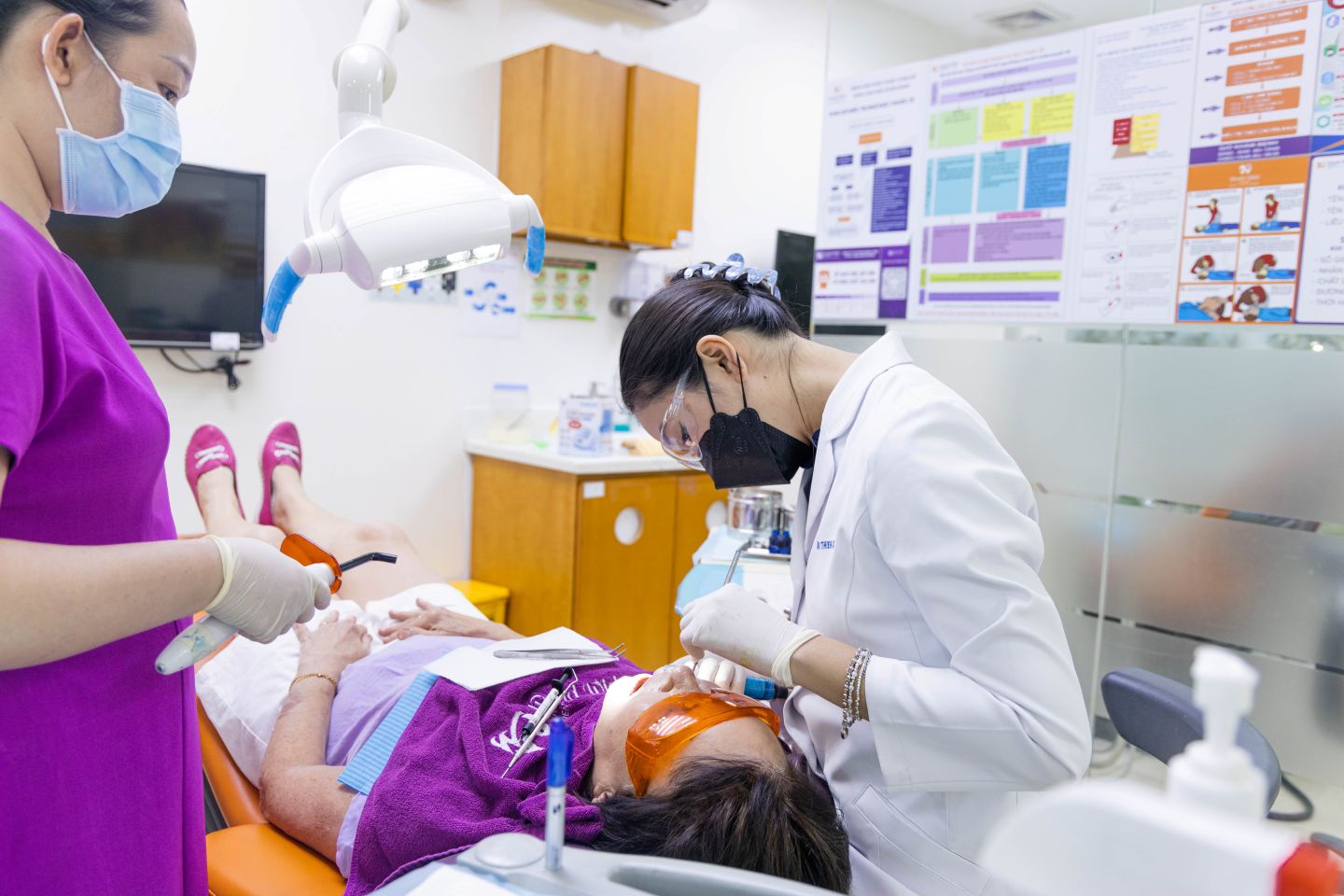
Under Ministry of Health regulations in Vietnam, dental conscious sedation and general anesthesia require specialized facility standards, monitoring equipment, and dedicated anesthesiology personnel. Outpatient dental clinics are legally prohibited from administering these techniques. Specialized hospitals provide fully authorized, pain-free, and anxiety-free interventions for these individuals.

3. Patients with Underlying Systemic Medical Conditions
Dental implant surgery is an invasive procedure dependent on systemic healing capacity. Patients with underlying medical conditions requiring elevated risk management include:
- Cardiovascular disease, hypertension, or a history of stroke or myocardial infarction.
- Diabetes mellitus.
- Blood clotting disorders or active anticoagulant therapy.
- Ongoing bisphosphonate therapy for osteoporosis.
- Hepatic impairment, renal failure, immunocompromised status, or organ transplant history.
In a hospital setting, preoperative multidisciplinary consultations establish personalized treatment protocols. These include adjusting anticoagulant dosages and managing blood glucose and blood pressure within safe therapeutic ranges to ensure surgical safety.
4. Complex Bone Grafting and Advanced Surgical Indications
Significant jawbone resorption precludes simple implant placement. Complex procedures encompass block bone grafting, open or closed sinus lifts, 3D ridge augmentation or immediate implant placement following full-mouth extractions.
These surgeries carry increased infection risks if sterile standards are compromised. Positive-pressure hospital operating rooms eliminate airborne bacteria. Combined with ultrasonic surgical devices (Piezotome) and medical-grade grafting materials, this environment supports successful osseointegration.
5. Time-Sensitive Care for Overseas and International Patients
Integrated Multi-Treatment Protocols
For patients traveling from abroad or distant regions, time constraints present a primary challenge. Completing an entire complex clinical sequence – encompassing damaged tooth extractions, bone grafting, sinus elevation, implant placement, and immediate temporary prosthesis delivery – within a single surgical procedure becomes essential.
Safe “All-in-One” Surgical Workflow
Safely executing this series of invasive procedures requires a hospital environment supported by conscious sedation techniques. This clinical protocol enables patients to navigate extended treatment sessions without psychological strain or physical exhaustion.
6. Elderly Patients and Emergency Preparedness
Individuals aged 60 and older represent a high-demand group for dental implants due to long-standing tooth loss. However, this patient group also exhibits reduced bone density and slower tissue regeneration accompanied by multiple co-existing chronic conditions.
Although rare, acute medical complications can arise during dental procedures (e.g., anaphylaxis, hypoglycemia, cardiovascular events). Specialized hospitals maintain emergency infrastructure rarely available in standard clinics:
- Centralized oxygen delivery systems and advanced airway management equipment.
- Automated external defibrillators (AED) and electrocardiogram (ECG) monitoring systems.
- On-site medical response teams and 24/7 emergency protocols.
7. Comparative Overview Dental Clinic versus Dental Hospital
| Evaluation Criteria | Dental Clinic | Dental Hospital |
| Single Implant | Suitable | Suitable |
| Full-Arch Implants (All-on-X) | Restricted to low-complexity cases | Suitable |
| Conscious Sedation | Legally unauthorized | Authorized under regulatory compliance |
| General Anesthesia | Not performed | Performed upon medical indication |
| Bone Grafting / Sinus Lifts | Restricted | Suitable (Sterile operating room environment) |
| Medically Compromised Patients | Restricted | Suitable (Multidisciplinary consultation) |
| Emergency Medical Infrastructure | Basic | Hospital-grade standards |
| Extended Surgical Duration | Induces significant patient fatigue | Supported by sedation and vital sign management |
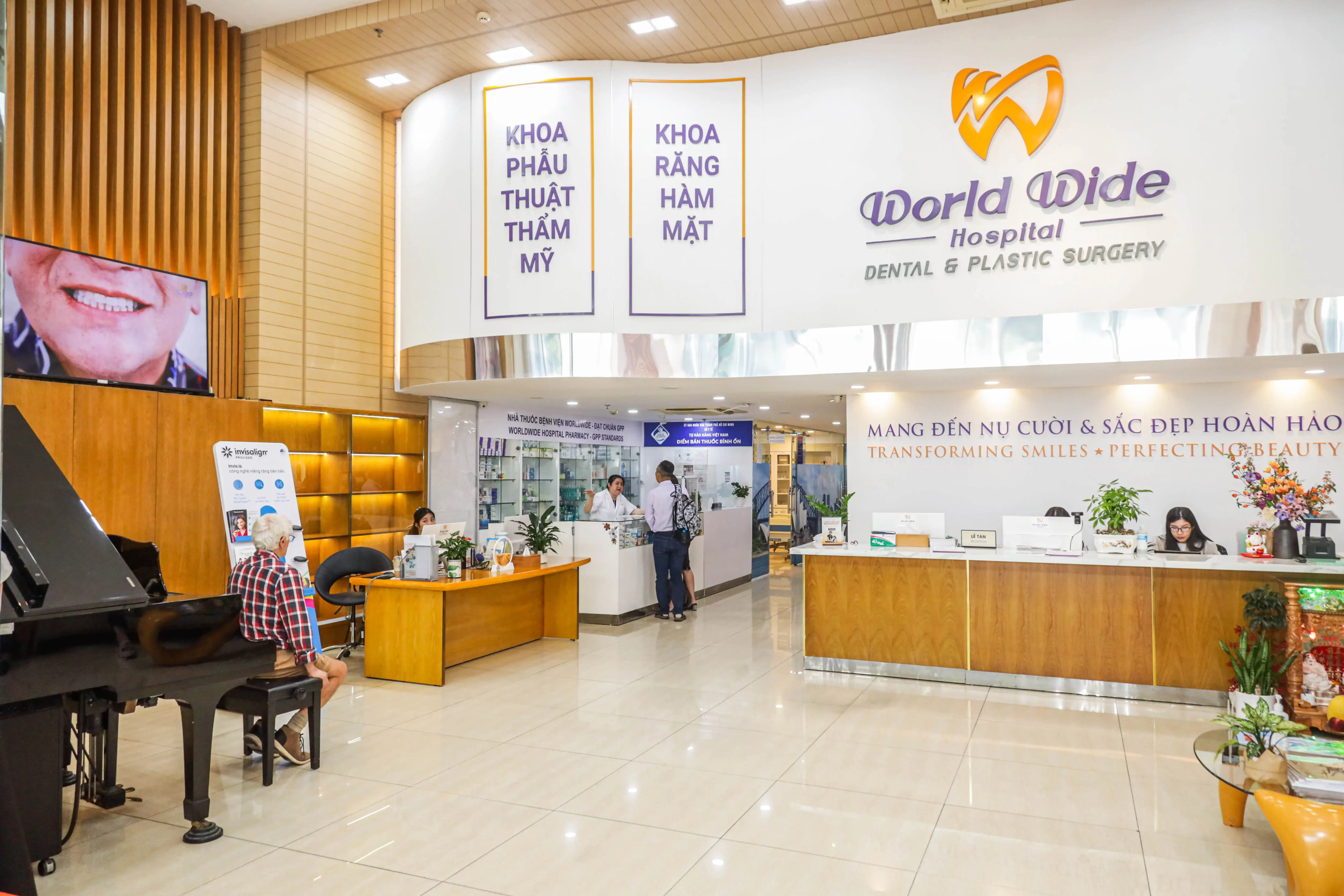
8. Dental Implant Safety at Worldwide Dental Hospital
Comprehensive Screening and Multidisciplinary Consultations
At Worldwide Dental Hospital, patients undergoing complex implant treatment undergo rigorous screening, including advanced 3D Cone Beam CT imaging, comprehensive blood panels, and direct consultations between implant specialists and anesthesiologists. Potential surgical risks are systematically identified and managed prior to intervention.
Integrated Infrastructure and Long-Term Medical Records
The facility features Ministry of Health-certified sterile operating rooms, quiet recovery rooms, and an in-house digital CAD/CAM dental laboratory for precise prosthetic fabrication. Digital treatment records support long-term post-operative tracking and the issuance of the Worldwide Implant Passport for material traceability.
Conclusion
Selecting an implant treatment setting extends beyond basic dental care—it represents a decision affecting long-term health outcomes. While outpatient clinics handle routine single-implant cases, a hospital environment offers necessary medical support for complex restorations, medically compromised patients, and full-arch procedures.
Worldwide Dental Hospital integrates specialized expertise, rigorous consultations, and medical-grade infrastructure to deliver safe, functional, and durable dental implant outcomes.
Frequently Asked Questions
1. Are Dental Implant Costs at Worldwide Dental Hospital Significantly Higher Than at Outpatient Clinics?
Treatment fees at Worldwide Dental Hospital reflect operating room standards, multidisciplinary care, strict sterilization protocols, and continuous vital monitoring equipment. Regarding long-term health and risk mitigation, hospital-based care represents a prudent investment that minimizes potential complication management costs.
2. Is Conscious Sedation Safe for Dental Implant Surgery?
Conscious sedation maintains a high safety profile when performed in a licensed hospital setting. Patients enter a deeply relaxed state while retaining independent breathing and responsiveness to verbal cues. The entire process is directly monitored by anesthesiologists using medical-grade monitoring systems at Worldwide Dental Hospital.
3. Can Patients Over Seventy Years of Age Receive Dental Implants?
Advanced age alone does not contraindicate dental implant placement. At Worldwide Dental Hospital, senior patients receive thorough medical evaluations, including blood work and cardiovascular screening. When underlying health parameters remain stable, implant surgery can proceed safely.
4. Can Patients with Diabetes Undergo Dental Implant Surgery at a Hospital?
Patients with diabetes can undergo implant placement provided blood glucose and HbA1c levels are well-controlled. Worldwide Dental Hospital conducts comprehensive pre-operative assessments to verify systemic stability and design tailored treatment plans.
5. How Much Time Should Overseas Patients Allocate for Full-Arch Dental Implants at Worldwide Dental Hospital?
Utilizing an integrated workflow and conscious sedation, the primary surgical phase – including tooth extraction, bone grafting, implant insertion, and temporary prosthesis attachment – is typically completed within 3 to 5 days. Most international patients stay approximately 10 to 14 days for follow-up care, suture removal, and healing assessment prior to travel.
6. Where Can US-Based Patients Receive a Complimentary Dental Implant Examination and Consultation?
Patients residing in the United States can visit the Worldwide Dental Representative Office:
- Address: 17055 Newland Street, Huntington Beach, CA 92647, USA
- Hotline: 714-867-7788
Our advisory team will provide preliminary evaluations, treatment planning support, and complimentary scheduling assistance before your departure to Vietnam.