Tiếng Việt

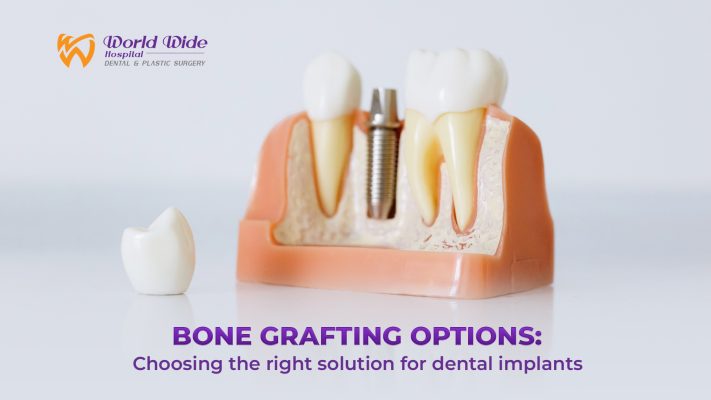
How many bone grafting methods are available? Explore the differences between particulate bone grafting, block bone grafting, collagen membranes, and titanium membranes in dental implant treatment at Worldwide Dental Hospital.
While often perceived as a supplementary step, bone grafting is a critical foundation for successful dental implant therapy. Bone augmentation encompasses distinct clinical techniques, each precisely indicated according to the patient’s degree of bone resorption.
Selecting the ideal grafting technique establishes a solid structural foundation for the implant, ensuring predictable, long-term restorative success.
Bone Grafting Explained: Why It’s Needed Before Dental Implants
Jawbone Resorption Following Tooth Loss
Following tooth loss, the jawbone gradually resorbs due to the loss of functional stimulation from the natural root. This progressive, silent loss diminishes both bone height and width.
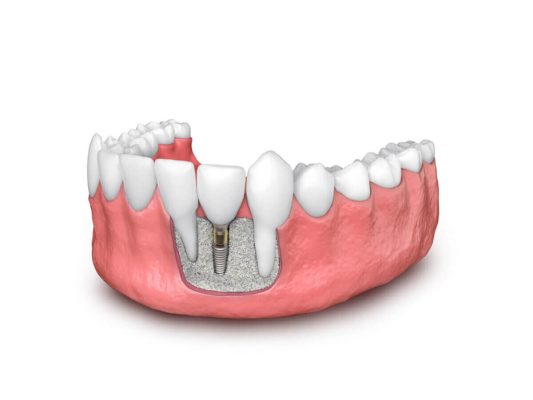
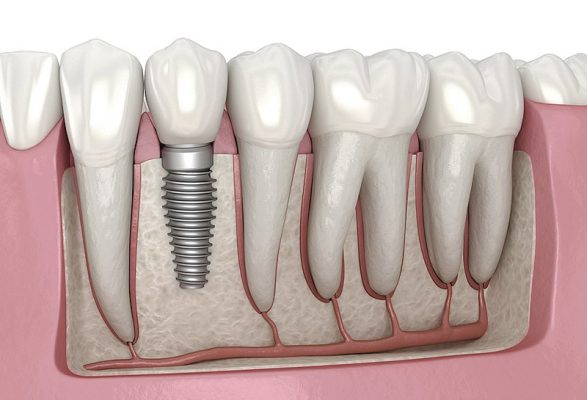
When residual bone volume is insufficient to support an implant, bone grafting is indicated to reconstruct a stable bone foundation prior to placement.
Not Every Dental Implant Patient Needs Bone Grafting
Contrary to popular belief, bone grafting is not a universal requirement for dental implant placement.
When tooth loss is recent or underlying bone quality remains sufficient, implants can be placed directly without augmentation.
Determining whether bone grafting is necessary requires a comprehensive clinical evaluation paired with 3D Cone Beam CT imaging, which precisely measures jawbone volume and density.
Bone Grafting Options for Dental Implants
Particulate Bone Grafting
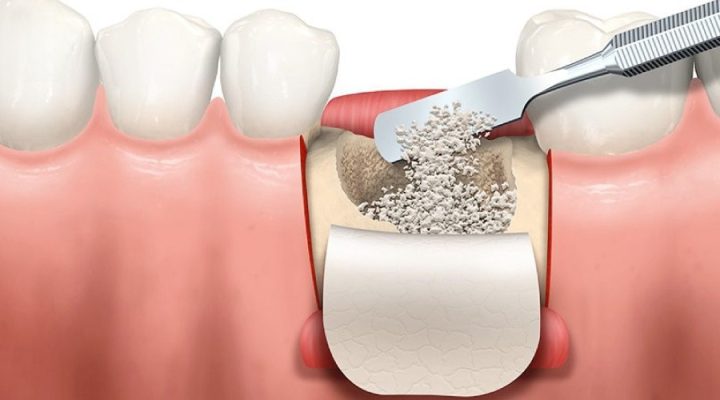
Particulate bone grafting utilizes micro-granular graft material to reconstruct areas of localized bone deficiency.
Once placed at the target site, the material acts as an osteoconductive scaffold, guiding new bone cell growth as native tissue gradually replaces the graft throughout the healing process.
This technique is primarily indicated for managing mild to moderate bone resorption, as well as augmenting bone volume around dental implants during placement.
Key Features:
- Minimally invasive.
- Easily shaped to conform to the bone defect.
- Widely applicable across various implant indications.
Block Bone Grafting
For severe bone resorption where the remaining jawbone is insufficient to anchor an implant, clinicians may recommend block bone grafting.
Unlike particulate grafting, this procedure utilizes a solid, precisely sized bone block to restore both the height and width of the jawbone.
This technique is primarily indicated for long-standing tooth loss or advanced bone deficiency requiring substantial structural reconstruction prior to implant placement.
Key Features:
- Restores significant bone volume.
- Enhances structural stability at the graft site.
- Ideal for complex implant cases.
Collagen Membrane Placement
Collagen membranes are frequently paired with bone grafting to protect the surgical site throughout the healing phase.
Acting as a physical barrier, the membrane prevents soft tissue ingrowth into the graft site; while maintaining dedicated space for natural bone cell regeneration.
Because these membranes are bioresorbable, they naturally break down over time – eliminating the need for a secondary surgical removal.
Key Features:
- Facilitates Guided Bone Regeneration (GBR).
- Protects the bone grafting material.
- Promotes smooth healing.
Titanium Membrane Placement
Titanium membranes (mesh) are generally indicated for extensive bone loss or cases requiring significant structural reconstruction.
Owing to its structural rigidity, titanium membranes reliably preserves the graft space, prevents soft-tissue collapse, and creates ideal conditions for stable, predictable bone regeneration.
This advanced technique is widely utilized in complex dental implant procedures.
Key Features:
- Effectively maintains space for bone regeneration.
- Supports treatment of severe bone loss.
- Enhances overall stability throughout the healing process.
No Single Method Is Best for Everyone
Every bone grafting technique is engineered to address a specific clinical scenario.
Certain cases require only particulate grafting, whereas others demand block bone grafts paired with collagen or titanium membranes to restore the necessary volume.
The key to predictable outcomes lies not in choosing a single “best” method, but in selecting the precise treatment tailored to each patient’s unique anatomical profile.
Factors Guiding Clinician’s Evaluation
Before determining the appropriate bone grafting procedure, clinicians conduct a thorough evaluation of several key parameters:
- Extent of Bone Loss.
- Height and width of the jawbone.
- Location of the missing tooth/teeth.
- Number of implants to be placed.
- Final prosthetic restoration plan.
- Overall oral health status.
Utilizing 3D Cone Beam CT imaging, clinicians precisely map the underlying bone architecture to engineer a customized treatment plan for every patient.
The Complexity of Bone Grafting
For many patients, bone grafting is the most daunting step prior to receiving dental implants.
In practice, the extent of intervention depends entirely on the volume of bone requiring regeneration and the specific technique indicated.
Minor bone grafting can often be performed simultaneously with implant placement. In contrast, severe bone loss requires a staged approach to ensure the graft fully integrates and achieves optimal density before the implant is placed.
A comprehensive consultation and evaluation by a specialized implant team is essential to selecting the right treatment strategy from the outset.
The Distinctive Edge of Bone Grafting at Worldwide
Precision Diagnostics
At Worldwide Dental Hospital, every bone grafting assessment begins with 3D Cone Beam CT imaging. This provides our clinicians with an exact evaluation of bone volume and density ensuring the selection of the most effective surgical approach.
Personalized Treatment Plans
Rejecting a one-size-fits-all approach, our implant specialists design custom treatment plans tailored to each patient’s unique clinical profile – optimizing healing outcomes and ensuring long-term implant osseointegration.
Hospital-Grade Surgical Environment
For extensive bone grafting or complex, multi-technique procedures, Worldwide Dental Hospital offers accredited operating suites and highly specialized surgical teams. Fully licensed by the Ministry of Health for sedation and general anesthesia within approved clinical scopes, we ensure total safety, precision, and comfort throughout your treatment.
Conclusion
Bone grafting is not a one-size-fits-all procedure, nor does every implant patient require the same approach.
Long-term restorative success relies on an accurate assessment of your jawbone anatomy to select the ideal technique, establishing a solid, permanent foundation for your implants.
At Worldwide Dental Hospital, our implant specialists personally conduct comprehensive evaluations, using 3D Cone Beam CT imaging to analyze bone structure and engineer a fully customized treatment plan.
If you have experienced prolonged tooth loss or have been advised that bone grafting is necessary prior to implant placement, schedule a consultation today for a precise evaluation and a tailored clinical solution.