Tiếng Việt

What are core build-ups and carbon fibre posts? Learn how they differ, what role each plays, and when a post and core build-up may be needed before a dental crown is placed.
When a tooth has been extensively decayed, badly fractured or previously treated with root canal therapy, there may not be enough natural tooth structure left to support a crown adequately. In suitable cases, the dentist may need to rebuild the core of the tooth and place a post within the root canal before proceeding with the crown.
This is often when patients first come across terms such as core build-up, carbon fibre post and fibre post, without necessarily understanding what they do or why some teeth require a post while others do not.
Understanding these two components can make it easier to see how a tooth that has lost a significant amount of structure can be restored.
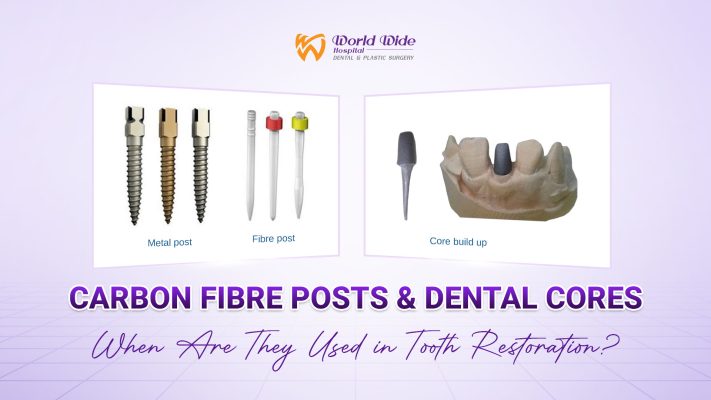
What Is a Core Build-Up?
The Core Provides the Foundation for a Crown
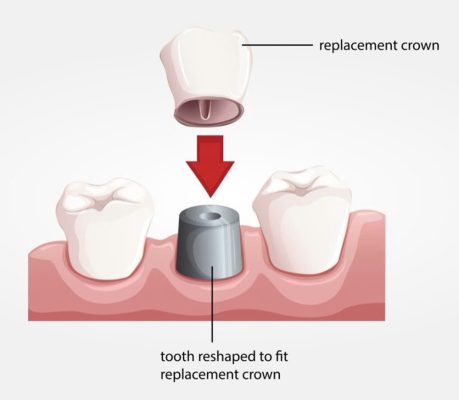
In simple terms, the core is the part of the tooth beneath the crown that provides the shape and foundation needed to support and retain the restoration.
If enough healthy tooth structure remains, the dentist may be able to prepare the natural tooth directly to support the crown.
However, when a tooth has been extensively decayed, fractured or has lost a large amount of structure following treatment, there may not be enough remaining tooth tissue to create a suitable foundation. In these cases, restorative material may be used to rebuild the core of the tooth before the crown is made.
Why Is the Core Important?
A useful way to think about it is that the crown is the visible structure above, while the core forms the foundation underneath.
A properly designed and rebuilt core can help to:
- Provide a foundation for the crown.
- Improve crown retention.
- Restore missing tooth structure and shape.
- Help distribute forces during biting and chewing.
- Support the stable function of the final restoration.
For this reason, planning a crown involves more than choosing the restorative material. The dentist also needs to assess the quality and amount of tooth structure remaining underneath.
What Is a Carbon Fibre Post?
A Post Is Placed Within the Root of the Tooth
A carbon fibre post is a type of dental post that may be placed into a prepared portion of the root canal after root canal treatment when clinically indicated.
While the core supports the crown above, the post sits deeper within the root and is primarily used to help retain the core build-up when there is not enough remaining tooth structure to hold it securely.
Together, these components can be used to restore a tooth that has lost a substantial amount of its original structure.
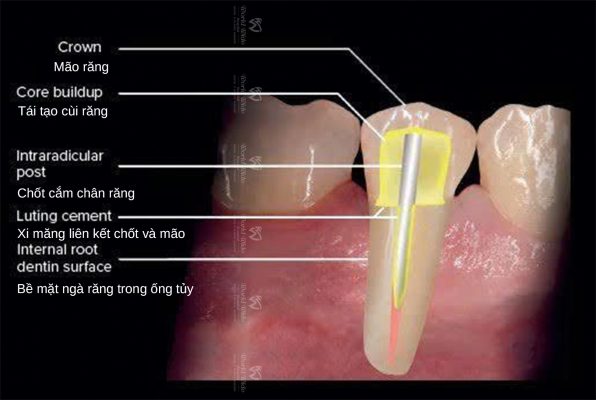
A Fibre Post Does Not Simply Make the Tooth “Stronger”
This is a common misconception.
Placing a post does not mean that using more posts will make a tooth stronger. The main purpose of a post is to provide retention for the core build-up when the remaining tooth structure is insufficient.
If enough natural tooth structure remains to rebuild the core and support the restoration securely, a post may not be necessary.
The guiding principle is to preserve as much natural tooth structure as possible and intervene only when there is a clear clinical indication.
What Is the Difference Between a Core Build-Up and a Carbon Fibre Post?
Although the two are often used together, they are not the same thing.
| Feature | Core build-up | Carbon fibre post |
|---|---|---|
| Location | In the coronal part of the tooth | Within the root of a root canal-treated tooth |
| Main role | Provides a foundation for the crown | Helps retain the rebuilt core |
| When may it be needed? | When a suitable foundation needs to be created for the crown | When there is not enough remaining tooth structure to retain the core |
| Is it needed for every tooth? | Depends on the restorative plan | No |
| Relationship | Supports the crown | Helps retain the core |
Importantly, placing a crown does not automatically mean that a post is required.
When Might a Tooth Need a Post and Core Build-Up?
A Root Canal-Treated Tooth With Significant Loss of Tooth Structure
Teeth requiring root canal treatment have often already been affected by extensive decay, trauma or other significant damage.
If too little tooth structure remains after treatment to retain the core build-up, the dentist may consider placing a post.
A Tooth That Is Severely Fractured or Broken Down
If a substantial portion of the visible tooth has been lost but the root can still be preserved, a post and core build-up may be considered to recreate a suitable foundation for the final restoration.
When the Remaining Tooth Structure Cannot Adequately Retain the Restoration
Root canal treatment alone does not mean that a tooth automatically needs a post.
Before deciding, the dentist will assess factors such as the amount of tooth structure remaining, the position of the tooth, the condition of the root, the bite and the planned restoration.
If enough tooth structure remains, placing an additional post may offer little benefit and may be unnecessary.
Why Are Fibre Posts Used in Dental Restorations?
Mechanical Properties That Are More Compatible With Tooth Structure
Modern fibre post systems are designed to have mechanical properties that may be more compatible with natural tooth structure than some very rigid post materials.
This can help with the way forces are transferred and distributed through the restored tooth during biting and chewing.
Supporting Aesthetic Restorations
Some fibre posts are tooth-coloured or translucent, which can help minimise the effect of the underlying post on the final appearance of the restoration, particularly when used beneath an all-ceramic crown.
This can be particularly relevant in areas where aesthetics are important.
Does Placing a Post Require Removing All of the Root Canal Filling?
No.
When preparing space for a post, the dentist removes only part of the root canal filling material, according to the treatment plan, while maintaining an appropriate amount of filling material near the tip of the root.
This step requires precision. The dentist needs to create enough space for the post while preserving the root structure and maintaining the seal achieved during root canal treatment.
Does Every Root Canal-Treated Tooth Need a Post?
No.
The decision depends largely on how much natural tooth structure remains.
If sufficient tooth structure remains after root canal treatment to retain the restoration, the dentist may choose a more conservative approach without placing a post.
If, however, the visible portion of the tooth has been extensively damaged and cannot adequately retain the core build-up, a post may be considered as additional support.
This reflects a key principle of modern conservative dentistry: avoid removing or altering more tooth structure than necessary.
How Does the Dentist Decide Whether a Post Is Needed?
Before restoring the tooth, the dentist will assess several factors, including:
- The amount of natural tooth structure remaining.
- The quality and condition of the root canal treatment.
- The length and shape of the root.
- The condition of the tissues surrounding the tooth.
- The tooth’s position in the dental arch.
- Biting forces and occlusion.
- The type of final restoration planned.
For this reason, two teeth that have both undergone root canal treatment may still require different restorative approaches.
Core Build-Ups and Dental Restorations at Worldwide Dental Hospital
At Worldwide Dental Hospital, restoring a damaged tooth involves more than simply selecting a crown material.
The dentist assesses the tooth from the root upwards, including the quality of the root canal treatment, the amount of tooth structure remaining, the bite and the requirements of the final restoration. This helps determine whether the tooth can be preserved, whether a post is needed, or whether a core build-up alone may be sufficient.
With an emphasis on preserving as much natural tooth structure as possible, treatment is planned according to the condition of the individual tooth rather than applying the same approach to every patient.
Alongside the clinical team, diagnostic imaging, digital restorative technology and an in-house CAD/CAM laboratory support coordination between treatment planning, restoration design and crown fabrication.

Conclusion
Core build-ups and carbon fibre posts serve different purposes, although they may be used together when restoring a tooth that has lost a substantial amount of structure. The core provides the foundation for the crown, while a post may be used to help retain the core when there is insufficient natural tooth structure remaining.
Importantly, not every root canal-treated tooth requires a post, and teeth with similar levels of damage do not necessarily require the same restorative approach.
At Worldwide Dental Hospital, the dentist will assess the condition of the tooth, its restorability and the requirements of the final restoration before recommending a treatment plan, with the aim of using only the intervention required, preserving as much natural tooth structure as possible and supporting a durable result.
If you have had root canal treatment, have a fractured tooth, or have been advised that you may need a post before having a crown, you can arrange an assessment at Worldwide Dental Hospital to discuss whether the tooth can be preserved and which restorative approach may be suitable.