Tiếng Việt


Missing teeth for many years and concerned about bone loss? Learn how bone levels are assessed, when grafting may be needed, and whether dental implants could be suitable.
Some people delay replacing missing teeth because they can still eat comfortably and have no pain. However, after a tooth is lost, the bone that once supported it usually changes and may gradually lose volume. This can make dental implant treatment more complex later on.
Long-term tooth loss may be accompanied by jawbone loss, gum recession, shifting teeth and reduced chewing function, particularly in middle-aged and older adults.
If your teeth have been missing for 10 – 20 years, these changes may leave you wondering whether dental implants are still an option especially if you’ve already experienced significant bone loss.
Jawbone loss does not necessarily rule out dental implants. Advances in diagnostic imaging, bone grafting techniques and modern restorative dentistry mean that many patients with insufficient bone can still be considered for implant treatment.
However, suitability depends on the extent of bone loss, the quality of the remaining bone, the location of your missing teeth and your overall health.
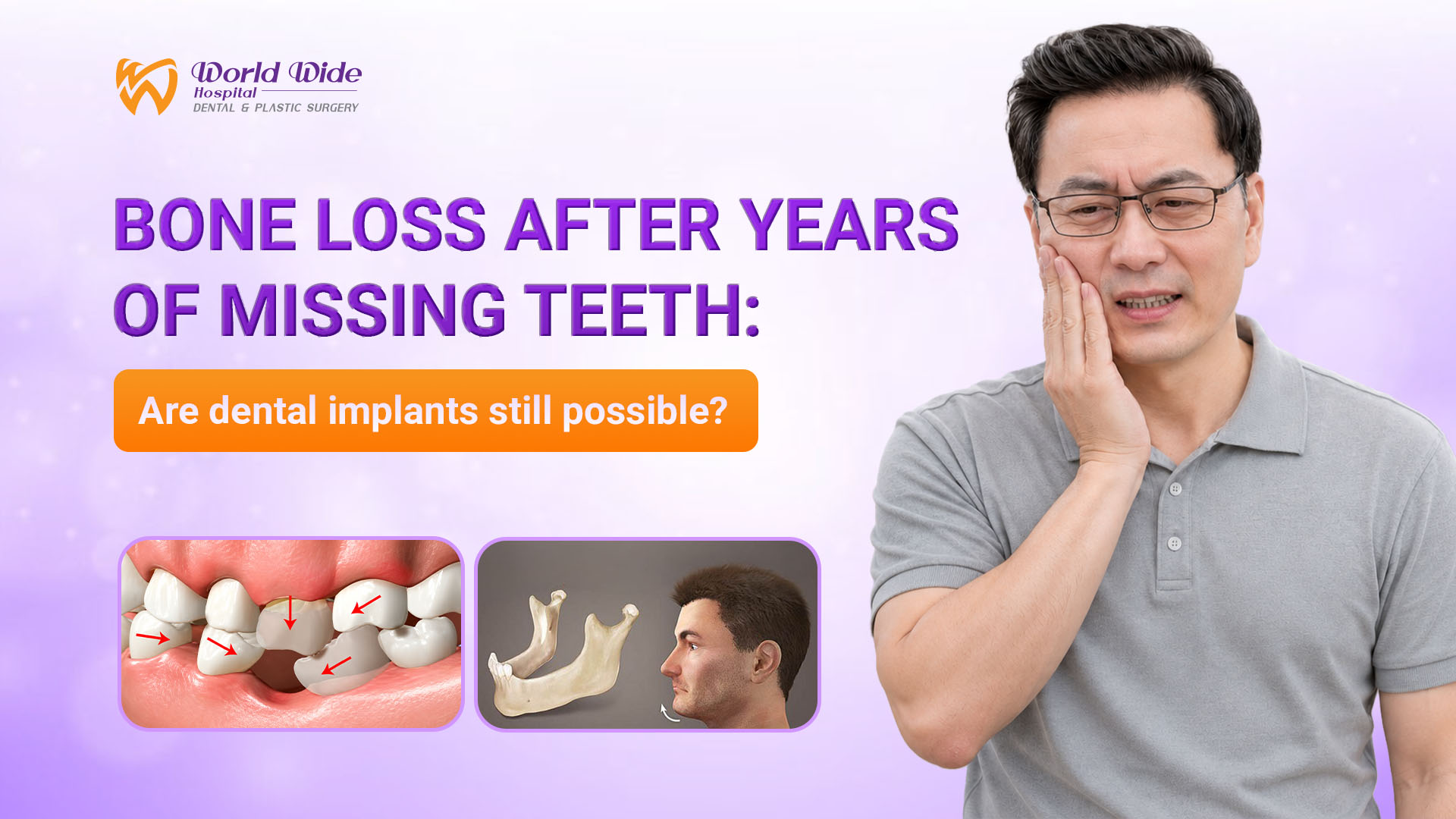
1. Why Does Bone Loss Occur After Tooth Loss?
1.1. How the Bone Changes When a Tooth Is Missing
Natural tooth roots are supported by the alveolar bone and periodontal ligament. During chewing, forces pass through these structures and contribute to normal bone remodelling.
After a tooth is lost, the surrounding alveolar bone no longer supports the tooth root. Bone remodelling following tooth loss commonly leads to a reduction in the volume of the alveolar ridge.
These changes can affect both bone height and width, leaving less bone at the missing tooth site.
1.2. Bone Loss Can Begin Soon After Tooth Loss
Bone loss does not take decades to develop. Changes in the alveolar bone can begin within the first few months after tooth loss. They are generally more pronounced early on and may continue over time.
The rate and extent of bone loss vary depending on:
- The location of the missing tooth.
- How long the tooth has been missing.
- The condition of the bone before tooth loss.
- The reason for tooth loss.
- A history of periodontitis.
- Individual healing.
- Denture use and the distribution of chewing forces.
Two people who have been missing teeth for 10 years may therefore have very different bone levels.
2. How Can Long-Term Tooth Loss and Bone Loss Affect Oral Health?
2.1. Reduced Chewing Function
Losing several teeth reduces the number of tooth contacts available for chewing, making it harder to break down food.
Some people choose softer foods, avoid hard or chewy foods, or rely on one side of the mouth.
For older adults, these limitations may affect dietary variety and quality of life.
2.2. Changes to the Jaw Ridge and Soft Tissue Support
Ongoing bone loss can leave the jaw ridge lower and narrower.
In people missing several teeth or a full arch, reduced support from the teeth and jawbone may contribute to changes around the mouth, lips and cheeks.
The extent of these changes also depends on age, facial structure and the condition of the soft tissues.
2.3. More Complex Tooth Replacement
Dental implants need sufficient supporting bone to achieve initial stability and support long-term function.
Where bone loss is significant, treatment planning may need to account for:
- Insufficient bone width for implant placement.
- Limited remaining bone height.
- Nearby anatomical structures.
- Changes in the space available for replacement teeth.
- The need for bone augmentation.
A longer period of tooth loss may increase treatment complexity, although bone grafting is not required in every case.
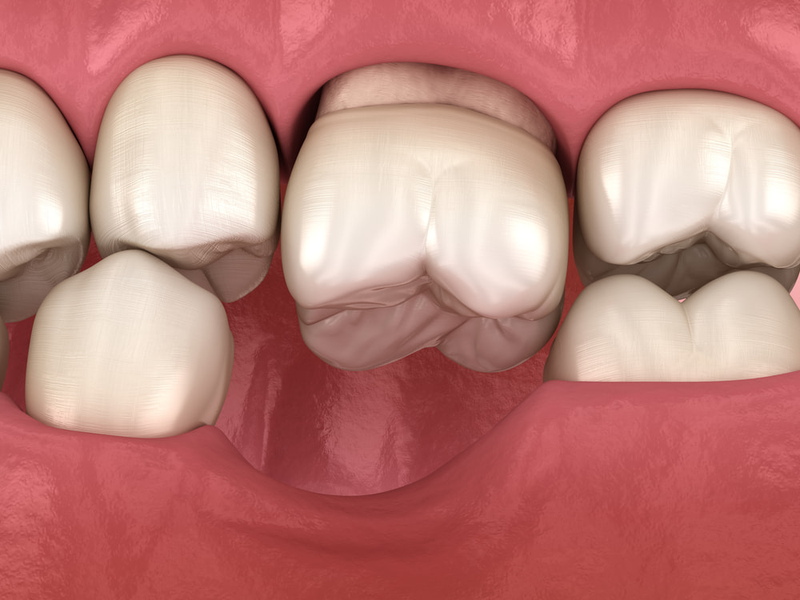
3. Are Dental Implants Possible After Long-Term Tooth Loss and Bone Loss?
Yes, if your dentist identifies a suitable approach after examining and assessing your condition.
Depending on the remaining bone, implants may be placed without grafting, at the same time as grafting, or after a separate bone augmentation procedure.
The categories below provide a general guide. Treatment also depends on the shape of the bone defect, the location of the missing teeth and the requirements of the planned restoration.
Case 1: Mild Bone Loss
If sufficient bone volume and quality remain at the planned implant site, placement without bone grafting may be considered.
Implant size, position and angle are planned using diagnostic information and must also support the intended replacement tooth or teeth.
Case 2: Moderate Bone Loss
Where bone width or height is insufficient, grafting may be considered to create a more suitable foundation.
Depending on the clinical situation, bone grafting may be performed during implant placement or as a separate procedure, followed by healing and reassessment.
Case 3: Significant or Complex Bone Loss
More extensive bone loss requires careful assessment and treatment planning.
The dentist considers the remaining bone volume, soft tissue condition, the relationship between the upper and lower jaws, and the feasibility of bone augmentation.
Some patients may need treatment in several stages before implants can be placed.
If anatomical or health factors make implant treatment unsuitable, other tooth replacement options may be recommended.
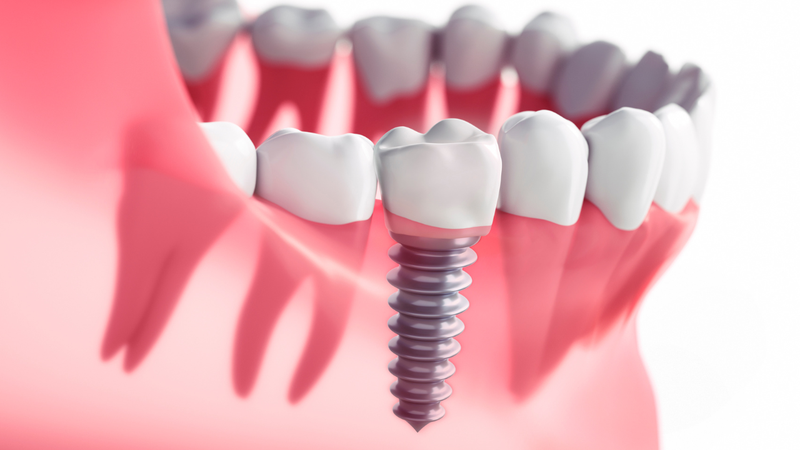
4. Supporting Procedures for Dental Implant Placement in Cases of Bone Loss
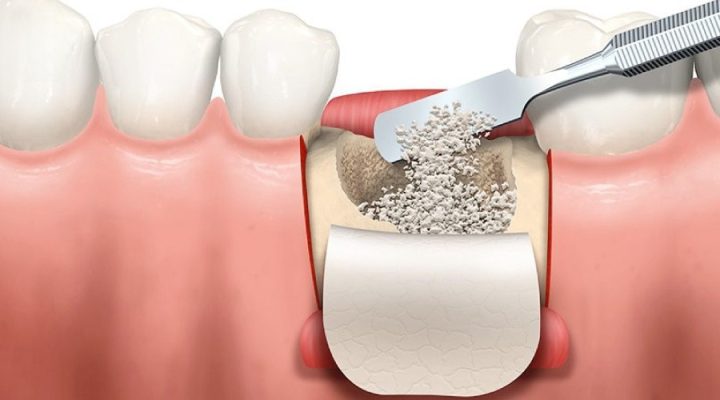
These techniques may be combined within the same treatment plan. Particulate or block grafts can be used with barrier membranes or supporting mesh, depending on the bone defect.
4.1. Particulate Bone Grafting
Particulate bone grafting uses graft material in small granules to support bone regeneration in areas of deficiency.
Graft materials come from different sources and are selected according to clinical requirements.
This approach may be considered for localised bone defects or to support bone regeneration around an implant.
Depending on the defect, the graft may be covered with a barrier membrane as part of guided bone regeneration.
4.2. Block Bone Grafting
A block graft may be considered where more substantial bone augmentation is needed, particularly when the jaw ridge is very narrow.
The procedure uses a block of graft material to increase bone volume in the deficient area.
Compared with more straightforward grafting procedures, block grafting generally requires more involved surgical planning and monitoring during healing.
Not every case of significant bone loss requires, or is suitable for, a block graft.
4.3. Guided Bone Regeneration with a Collagen Membrane
In guided bone regeneration (GBR), a collagen membrane may be used to cover and protect the grafted area.
The membrane helps limit the early growth of soft tissue into the treatment site. Maintaining space for bone regeneration also depends on the graft material, the shape of the defect, and any supporting or fixation measures required.
A collagen membrane is not a bone substitute. It supports the bone regeneration process.
4.4. Bone Augmentation with Titanium Mesh
Titanium mesh may be considered where a bone defect requires more rigid support to maintain space around the graft.
The mesh helps hold the planned shape of the augmented area during healing.
This technique requires careful soft tissue management and carries specific risks, including mesh exposure.
The selection or combination of collagen membranes, titanium mesh and other supporting materials depends on the defect and the planned augmentation procedure.
5. Does Bone Loss Differ Between the Upper and Lower Jaws?
Yes. Differences in anatomy mean that implant planning considerations vary between the two jaws.
Bone Loss in the Upper Jaw
In the back of the upper jaw, the position and shape of the maxillary sinus are important considerations.
After tooth loss, the available bone height may decrease through a combination of alveolar bone resorption and expansion of the sinus.
A sinus lift may be considered in suitable cases to create more favourable conditions for implant placement.
Bone Loss in the Lower Jaw
In the lower jaw, particularly towards the back, the distance to the inferior alveolar nerve canal is an important consideration.
Where remaining bone height is limited, implant position, size and the overall restorative approach need careful planning.
The same technique cannot therefore be applied to every case of upper or lower jawbone loss.
6. Is Bone Grafting Always Needed If Teeth Have Been Missing for 10–20 Years?
Not necessarily.
The length of time a tooth has been missing does not determine the need for grafting on its own.
Some people retain sufficient bone at the planned implant sites after many years of tooth loss. Others may have substantial bone deficiencies soon after losing a tooth because of periodontitis, infection or previous damage.
To determine whether bone grafting is needed, your dentist will assess:
- Remaining bone height and width.
- Bone quality at the planned implant site.
- The shape of the jaw ridge.
- Soft tissue condition.
- Nearby anatomical structures.
- The planned number of implants.
- The design of the final restoration.
The need for grafting is determined through clinical examination and appropriate diagnostic imaging.
7. How Long After Bone Grafting Can Dental Implants Be Placed?
Healing time depends on the type of procedure, graft material, amount of bone needed and individual healing.
In some cases, bone grafting and implant placement can be performed during the same procedure, provided there is enough existing bone to position the implant correctly and keep it stable.
If bone grafting needs to be done first, the grafted area generally requires several months to heal before the dentist can assess whether the implant is ready to be placed.
This may take around 3-6 months in some cases, or longer if more extensive grafting is required.
Your dentist will monitor your healing and determine when it is appropriate to proceed with implant placement.
8. Why Is Cone Beam CT Used for Implant Planning in Patients with Bone Loss?
Assessing the Jawbone in Three Dimensions
Unlike conventional two-dimensional X-rays, cone beam computed tomography (CBCT) provides three-dimensional images of the jawbone.
These images help assess:
- Bone height.
- Ridge width.
- The shape and extent of bone defects.
- Sinus position.
- Nerve canal position.
- Other relevant anatomical structures.
These factors are important when planning dental implants for patients with long-term tooth loss.
Planning Surgery and the Final Restoration
Diagnostic information helps the dentist plan implant position and size, and assess whether additional procedures may be needed.
Implant placement is also planned around the final restoration to support chewing function and access for long-term cleaning.
9. Can Older Adults with Jawbone Loss Have Dental Implants?
Age alone does not determine suitability for dental implants.
A person in their seventies with stable health, well-controlled medical conditions and suitable bone may be considered for treatment.
A younger person with an uncontrolled medical condition or complex bone deficiencies may need treatment to be postponed or the plan adjusted.
Assessment in older adults includes:
- Cardiovascular conditions and high blood pressure.
- Diabetes.
- Osteoporosis.
- Current medications, especially those for bone conditions.
- Healing capacity.
- Oral and periodontal health.
- The ability to maintain oral hygiene and ongoing care.
A comprehensive assessment helps identify an appropriate tooth replacement option.
10. Implant Treatment for Long-Standing Tooth Loss at Worldwide Dental Hospital
Assessing Bone Loss and Oral Health
At Worldwide Dental Hospital, assessment begins with an examination of the jawbone, soft tissues and overall oral health before a treatment plan is developed.
CBCT imaging helps the treating dentist assess remaining bone volume, identify areas of deficiency and examine relevant anatomical structures.
These findings help determine whether implants can be placed without grafting or whether bone augmentation may be needed.
Clinical Team and Surgical Facilities
Complex bone loss requires coordinated planning across diagnosis, surgery and restorative care.
Worldwide Dental Hospital’s clinical team, operating theatres and equipment support implant procedures within the hospital’s approved scope of practice.
Where sedation or general anaesthesia is indicated, the clinical team assesses the patient’s health and selects an appropriate approach to pain management, anxiety and treatment support.
Planning the Final Restoration from the Start
Dental implant treatment requires not only implant stability in the jawbone but also proper planning for the final restoration.
At Worldwide Dental Hospital, treatment planning considers bone condition, proposed implant positions, the bite and the design of the final restoration.
The hospital’s in-house CAD/CAM laboratory supports the design and manufacture of restorations, with attention to both chewing function and appearance.
11. Frequently Asked Questions
Can I Have Dental Implants If I Have Severe Bone Loss?
Some patients may be considered for implants following appropriate bone augmentation. Suitability depends on anatomy, overall health and the expected outcome in each case.
Can I Have Dental Implants If My Teeth Have Been Missing for 20 Years?
Possibly. The length of time teeth have been missing does not automatically rule out implants. Assessment includes remaining bone volume, the space available for replacement teeth and other clinical factors.
Can Bone Grafting Fully Restore the Bone I Have Lost?
It is not always possible to restore the full amount of bone that has been lost. Bone grafting aims to create or improve the bone conditions needed for treatment, depending on each patient’s individual response.
Can I Have Full-Arch Dental Implants If I Have Bone Loss?
It may be an option in suitable cases. Before recommending treatment, the dentist needs to assess the extent of bone loss, the planned implant positions and number of implants, the ability to support the final restoration, and the patient’s overall health.
Conclusion
Long-standing tooth loss and bone loss do not necessarily rule out dental implants. Diagnostic assessment and bone augmentation techniques may make implant treatment possible for some patients with limited bone.
However, grafting is not required in every case, and no single approach is suitable for every bone defect.
Treatment planning considers the extent of bone loss, remaining bone quality, overall health and the requirements of the final restoration.
At Worldwide Dental Hospital, clinical examination and CBCT assessment help guide recommendations based on each patient’s circumstances.
If you have been missing teeth for many years, have difficulty chewing or have previously been told you do not have enough bone for implants, book a consultation to explore your treatment options.