Tiếng Việt

Learn the differences between titanium-reinforced acrylic and zirconia bridges for full-arch dental implants, including their benefits, limitations and maintenance needs.
When considering full-arch dental implants, such as All-on-4 or All-on-6, it’s important to understand not only the implants themselves but also the replacement teeth attached to them.
Full-arch implant treatment typically involves two stages. Temporary teeth may be fitted after implant surgery while the implants heal and integrate with the jawbone. Once the implants are ready, the temporary teeth are replaced with a final fixed bridge.
Two common options for the final bridge are titanium-reinforced acrylic and zirconia. Each has different characteristics in terms of appearance, wear resistance, maintenance and cost.
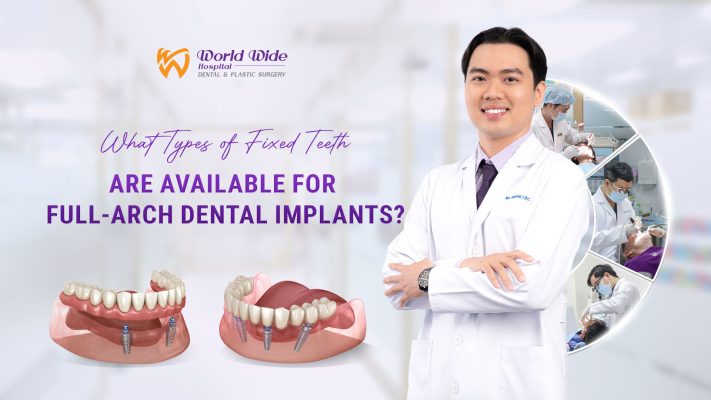
1. What Are Fixed Teeth on Full-Arch Dental Implants?
With treatments such as All-on-4 or All-on-6, several dental implants are placed in the jawbone to support a full set of replacement teeth.
Unlike traditional removable dentures, fixed implant-supported teeth are securely attached to the implants. You do not need to remove them each day. Depending on the design, your dentist can remove the bridge using specialised tools when maintenance or repairs are required.
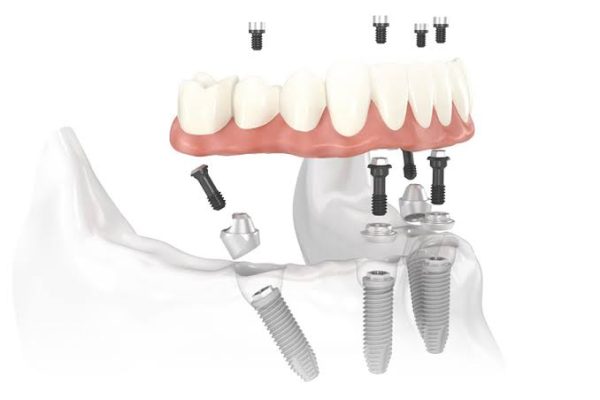
A full-arch implant restoration consists of three main components:
- Dental implants: Small fixtures placed in the jawbone to act as artificial tooth roots.
- Abutments: Connectors that attach the replacement teeth to the implants.
- Full-arch bridge: A set of replacement teeth designed to restore your smile and chewing function.
For the restoration to function properly, your dentist needs to consider how the implants, connectors and replacement teeth work together, particularly how chewing forces are distributed across the implants.
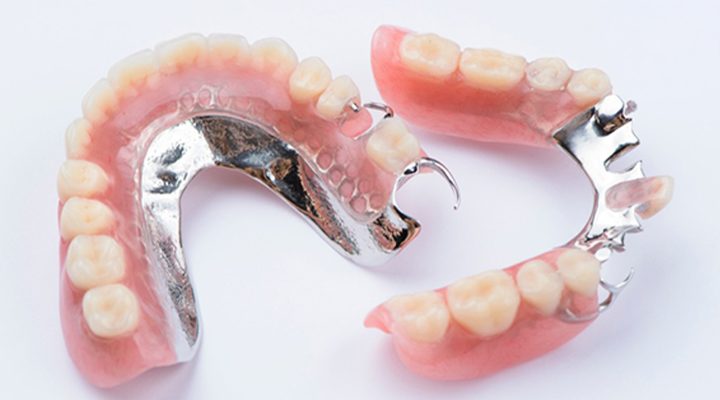
2. Titanium-Reinforced Acrylic Bridges
A titanium-reinforced acrylic bridge is one option for the final fixed teeth used in full-arch implant treatment.
It consists of a titanium framework that provides structural support, with replacement teeth and artificial gum sections made from dental acrylic or other suitable resin materials.
The titanium framework supports the bridge, while the acrylic components are shaped to restore the appearance of the missing teeth and gums.
Benefits
- Relatively lightweight: The combination of titanium and acrylic can produce a relatively lightweight restoration, depending on its design.
- Restores both teeth and gums: The bridge can replace missing teeth and help restore the appearance of gum tissue lost through tooth loss or bone resorption.
- Easier to repair: Acrylic components are generally easier to adjust or repair than a solid zirconia restoration.
- More affordable: Titanium-reinforced acrylic bridges are typically less expensive than zirconia bridges, although costs vary depending on the materials and design.
Limitations
Compared with zirconia, acrylic teeth are generally more prone to wear, surface scratches and discolouration over time.
Depending on their condition, some components may eventually need polishing, repair or replacement.
Regular dental check-ups and proper daily cleaning are important to help maintain the bridge and the implants supporting it.
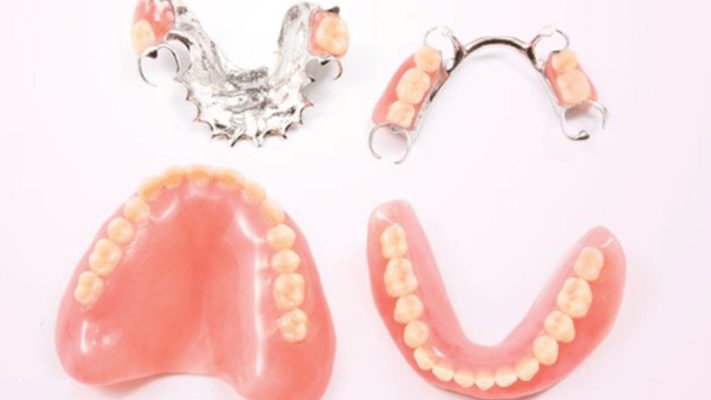
3. Zirconia Bridges for Full-Arch Dental Implants
Zirconia is a strong dental ceramic used for implant-supported restorations.
It is valued for its hardness, resistance to wear and natural-looking appearance.
Benefits
- High strength and wear resistance: Zirconia is highly resistant to wear during normal use.
- Natural-looking appearance: The shape, size and colour of the teeth can be customised to complement your facial features and smile.
- Good colour stability: Zirconia is generally more resistant to staining and discolouration than many dental acrylic materials.
- Smooth, polished surfaces: When properly finished and designed, zirconia surfaces can support effective daily cleaning.
Modern computer-aided design and manufacturing technology (CAD/CAM) also allows zirconia bridges to be designed and produced using digital measurements, helping achieve the planned tooth shape, dimensions and fit.
Limitations
Although zirconia is very strong, its hardness also needs to be considered when planning the restoration.
If a zirconia bridge becomes chipped, cracked or damaged, repairs may be more complicated than those required for an acrylic bridge.
Your dentist must also carefully assess your bite and chewing forces to ensure the restoration is appropriately designed.
Zirconia bridges are generally more expensive to produce than titanium-reinforced acrylic bridges.
For these reasons, zirconia is not automatically the best choice for every patient. Its suitability depends on the condition of your implants, your bite and the overall restoration design.
4. Titanium-Reinforced Acrylic vs Zirconia: What’s the Difference?
Both materials can be used for the final fixed bridge supported by full-arch dental implants.
The main differences relate to their construction, resistance to wear, repair requirements and cost.
| Feature | Titanium-Reinforced Acrylic | Zirconia |
| Construction | Titanium framework with acrylic teeth and artificial gums | Solid zirconia or zirconia combined with other components |
| Appearance | Can reproduce natural-looking teeth and gums | Tooth shape and colour can be customised |
| Wear resistance | Acrylic components are more prone to wear | Highly resistant to wear |
| Repairs | Generally easier to repair or adjust | Repairs may be more complex |
| Maintenance | Acrylic components may need repair or replacement over time | Regular checks of the bridge, bite and connections are required |
| Cost | Generally more affordable | Generally more expensive |
Note: This comparison is a general guide. The performance and lifespan of either restoration depend on its design, the condition of the implants, your oral habits and ongoing care.
5. Which Material Is Right for You?
Choosing between acrylic and zirconia involves more than comparing their strength, appearance or price.
A titanium-reinforced acrylic bridge may be suitable if you are looking for a more affordable option and prefer a restoration with components that are generally easier to repair.
A zirconia bridge may be worth considering if you place greater importance on wear resistance, colour stability and appearance, provided your dental condition is suitable.
Before recommending a material, your dentist will assess several factors:
- Number, position and stability of the implants: To determine whether they can adequately support the proposed bridge.
- Jawbone and gum condition: These affect the shape, structure and design of the restoration.
- Your bite and chewing forces: Particularly important if you grind or clench your teeth.
- Available space: The bridge needs sufficient room for the chosen materials and design.
- Cleaning and maintenance: The design should allow you to clean around and underneath the bridge effectively.
- Your preferences and budget: To help identify an option that balances your treatment needs with your expectations.
Ideally, the type of final bridge should be discussed during the initial implant treatment planning, rather than decided only after the implants have been placed.
6. Do Fixed Implant Bridges Need Regular Maintenance?
Yes. Although the replacement teeth are fixed in place, they still require daily care and regular professional check-ups.
You will need to clean around the bridge and implants each day, including the spaces between the bridge and your gums, using the methods and tools recommended by your dentist.
During follow-up appointments, your dentist may check:
- The health of the gums and bone surrounding the implants.
- Your bite and any signs of wear on the replacement teeth.
- The stability of the screws, connectors and other components.
- Areas beneath the bridge where plaque or food debris may accumulate.
- Any signs of damage or other problems that need attention.
Regular maintenance helps identify potential concerns with the implants or restoration before they develop into more serious problems.
7. Full-Arch Implant Restorations at Worldwide Dental Hospital
At Worldwide Dental Hospital, full-arch implant treatment is planned with both the implant surgery and the final restoration in mind.
Our dental team assesses factors such as jawbone condition, implant positioning, bite alignment and the available space for the bridge when developing an individual treatment plan.
The hospital’s in-house CAD/CAM dental laboratory supports collaboration between dentists and dental technicians throughout the design, trial fitting and completion of the restoration.
This allows aspects such as tooth shape, colour, smile line and bite alignment to be adjusted according to each patient’s individual needs.
The choice between a titanium-reinforced acrylic bridge and a zirconia bridge is based on clinical findings, the proposed treatment plan and your personal preferences.
Conclusion
Full-arch dental implant treatment may involve temporary teeth during healing, followed by a final fixed bridge once the implants are ready.
Titanium-reinforced acrylic and zirconia are two commonly used options for the final restoration. Each has its own benefits and limitations in terms of appearance, wear resistance, repair requirements and cost.
There is no single material that is right for everyone. The most suitable option depends on your dental condition, the design of the restoration and your individual needs.
To learn more about your options, book a consultation with the dental team at Worldwide Dental Hospital for an assessment and personalised advice on full-arch implant restoration.